If I was a work of art . . .

If I was a work of art

May 14, 2013

If I was a work of art
I would be a picture of the wind
blowing fast.
The wind, sort of light blue,
really hard and strong.
I would be blowing away
from hatred,
blowing toward love.
When people see the picture
they would know
I was going the right direction
instead of the wrong one.

Anthony Manago
3rd Grade

Thorndyke Elementary After School Program
Writes of Passage Poetry Class with Vicky Edmonds
May 2003


You are invited to share this poem and the following questions with someone:

– If you were a work of art, what would you be?
– As with all poems, the words are so wise. How does knowing the poet was in 3rd grade affect you?
– What would your inner 9-year old say to you today?

The student 10 years later

Monday Morning Inspiration . . .

Rock with Me

Rock with Me

Rocking With Me
Author Unknown

There was once an elderly, despondent woman in a nursing home. She wouldn’t speak to anyone or request anything. She merely existed – rocking in her creaky old rocking chair.

The old woman didn’t have many visitors. But every couple mornings, a concerned and wise young nurse would go into her room. She didn’t try to speak or ask questions of the old lady. She simply pulled up another rocking chair beside the old woman and rocked with her.

Weeks or months later, the old woman finally spoke.

‘Thank you,’ she said. ‘Thank you for rocking with me.'”

Consider this: Who do you need to sit and rock with today?

What is a good love?

They say a good love is one that sits you down, gives you a drink of water, and pats you on top of the head. But I say a good love is one that casts you into the wind, sets you ablaze, makes you burn through the skies and ignite the night like a phoenix;the kind that cuts you loose like a wildfire and you can’t stop running simply because you keep on burning everything that you touch!I say that’s a good love; one that burns and flies, and you run with it!

— C. Joybell

Something to think about . . .

We have to allow ourselves to be loved by the people who really love us, the people who really matter. Too much of the time, we are blinded by our own pursuits of people to love us, people that don’t even matter, while all that time we waste and the people who do love us have to stand on the sidewalk and watch us beg in the streets! It’s time to put an end to this. It’s time for us to let ourselves be loved.


— C. JoyBell

Something to think about . . .

Maybe you can afford to wait. Maybe for you there’s a tomorrow. Maybe for you there’s one thousand tomorrows, or three thousand, or ten,
so much time you can bathe in it, roll around it, let it slide like coins through you fingers. So much time you can waste it. But for some of us there’s only today. And the truth is, you never really know.

— Lauren Oliver

Seek to understand first . . . A funny leadership story

20130509-075251.jpg

By Michael Rogers

I heard a story the other day that reminded me of the need for leaders and people in general to seek to understand first before getting involved. In my years of observing leaders I have seen many of them jump to conclusions and get involved in issues way too soon.

In many cases the wise leader that is patient and seeks to understand the problem first; eventually discovers that there is very little he or she has to do to help solve it. Many issues have a way of working themselves out without the need of the leader intervening. At the very least the leader that seeks to understand first puts himself or herself at a greater advantage in helping get the problem resolved if it needs to be.

The Sharing Couple

One day a little old and very cute couple walked into the local fast food restaurant. The little old man went up to the counter and ordered their food. He brought back to the table a hamburger, a small amount of fries and a drink.

Carefully he sliced the hamburger in two and then neatly divided the fries into two small piles. He sipped the drink and then passed it to his wife. She took a sip and passed it back.

A younger man at a nearby table observed this couple and begin to feel sorry for them. He offered to buy them another meal, but the old man respectfully declined saying that they were used to sharing everything.

The old man began to eat his food while his wife sat still, not eating. The young man continued to watch the old couple feeling there was something he should be doing to help. As the old man finished his half of the burger and fries, the old lady still had not started eating hers.

The young man couldn’t take it anymore. He asked, “Ma’am, why aren’t you eating?” The old lady looked up and politely said, pointing to the old man, “I’m waiting on the teeth.”

You might have the same initial reaction my wife had when I shared this story with her. She laughed and then with a disgusted look on her face said, “Gross!”

But how many times are things not as they appear? Seek to understand first is a good rule of thumb.

What has been your experience as a leader with jumping to conclusions? Has someone ever misunderstood you? I would love to hear your thoughts on this by commenting below.

Monday Morning Inspiration . . .

20130501-103716.jpg

Wandering Around an Albuquerque Airport Terminal
by Naomi Shihab
Nye

After learning my flight was detained four hours,
I heard the announcement:
If anyone in the vicinity of gate 4-A understands any Arabic,
Please come to the gate immediately.

Well—one pauses these days. Gate 4-A was my own gate. I went there.
An older woman in full traditional Palestinian dress,
Just like my grandma wore, was crumpled to the floor, wailing loudly.
Help, said the flight service person. Talk to her. What is her
Problem? We told her the flight was going to be four hours late and she
Did this.

I put my arm around her and spoke to her haltingly.
Shu dow-a, shu-beduck habibti, stani stani schway, min fadlick,
Sho bit se-wee?

The minute she heard any words she knew—however poorly used—
She stopped crying.
She thought our flight had been canceled entirely.
She needed to be in El Paso for some major medical treatment the
Following day. I said no, no, we’re fine, you’ll get there, just late.

Who is picking you up? Let’s call him and tell him.
We called her son and I spoke with him in English.
I told him I would stay with his mother until we got on the plane and
Would ride next to her—Southwest.

She talked to him. Then we called her other sons just for the fun of
It. Then we called my dad and he and she spoke for a while in Arabic and
Found out of course they had ten shared friends.
Then I thought just for the heck of it why not call some Palestinian
Poets I know and let them chat with her. This all took up about two hours.

She was laughing a lot by then. Telling about her life. Answering
Questions.

She pulled a sack of homemade mamool cookies—little powdered
Sugar crumbly mounds stuffed with dates and nuts—out of her bag—
And was offering them to all the women at the gate.

To my amazement, not a single woman declined one. It was like a
Sacrament. The traveler from Argentina, the traveler from California,
The lovely woman from Laredo—we were all covered with the same
Powdered sugar. And smiling. There is no better cookie.

And I noticed my new best friend—by now we were holding hands—
Had a potted plant poking out of her bag, some medicinal thing,
With green furry leaves. Such an old country traveling tradition. Always
Carry a plant. Always stay rooted to somewhere.

And I looked around that gate of late and weary ones and thought,
This is the world I want to live in. The shared world.
Not a single person in this gate—once the crying of confusion stopped
—Has seemed apprehensive about any other person.

They took the cookies. I wanted to hug all those other women too.
This can still happen anywhere.

Not everything is lost.

Consider this: what insight do you gain from this poem?

Monday Morning Inspiration . . .

Good Corn

Growing Good Corn
– Steve Goodier

Life Support System

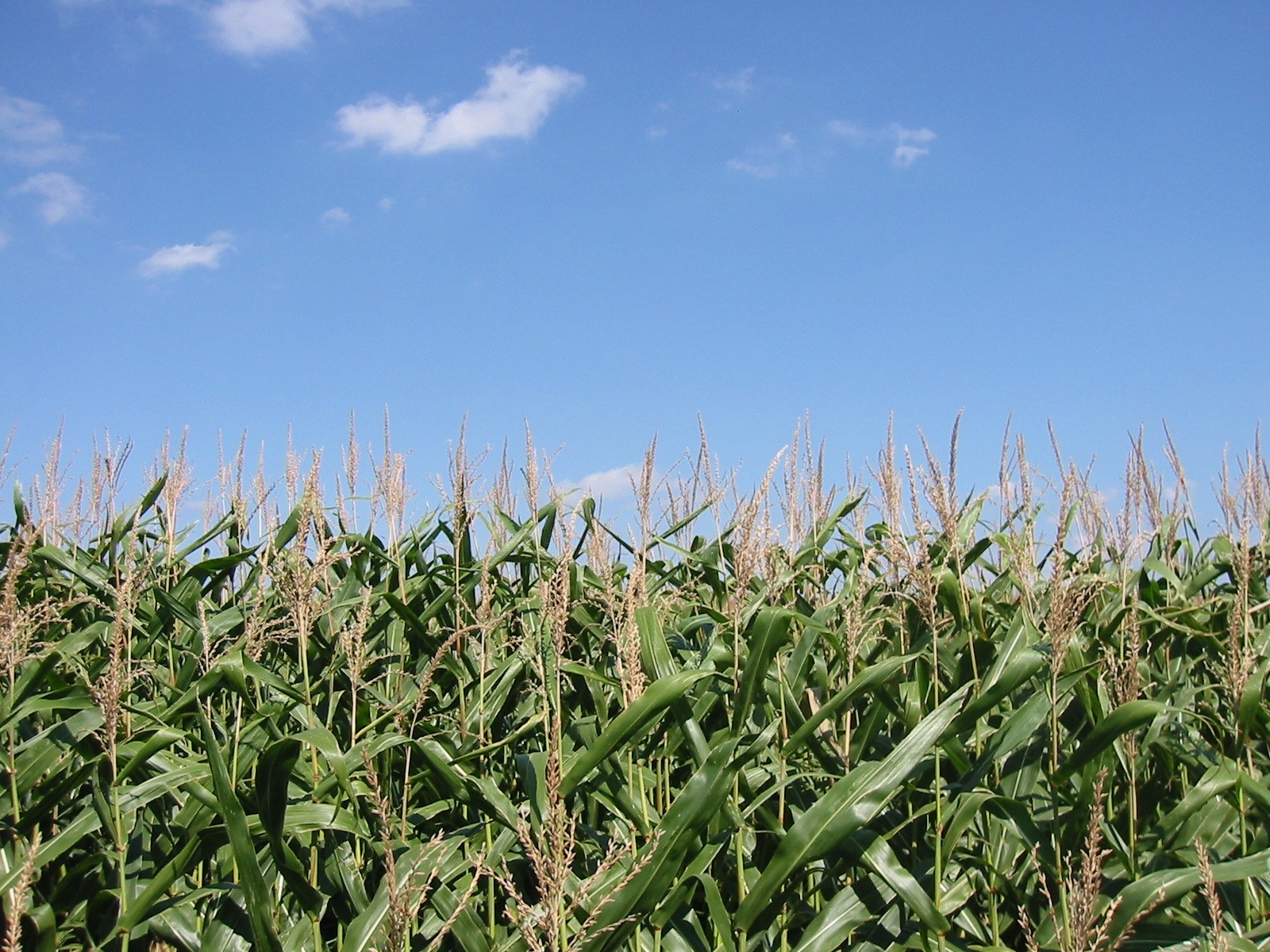
There once was a farmer who grew award-winning corn. Each year he entered his corn in the state fair where it won a blue ribbon.

One year a newspaper reporter interviewed him and learned something interesting about how he grew it. The reporter discovered that the farmer shared his seed corn with his neighbors.

“How can you afford to share your best seed corn with your neighbors when they are entering corn in competition with yours each year?” the reporter asked.

“Why sir,” said the farmer, “didn’t you know? The wind picks up pollen from the ripening corn and swirls it from field to field. If my neighbors grow inferior corn, cross-pollination will steadily degrade the quality of my corn. If I am to grow good corn, I must help my neighbors grow good corn.”

He is very much aware of the connectedness of life. His corn cannot improve unless his neighbor’s corn also improves.

So it is with our lives. Those who choose to live in peace must help their neighbors to live in peace. Those who choose to live well must help others to live well, for the value of a life is measured by the lives it touches. And those who choose to be happy must help others to find happiness, for the welfare of each is bound up with the welfare of all.

The lesson for each of us is this: if we are to grow good corn, we must help our neighbors grow good corn.

Consider this: Who are you helping today?